

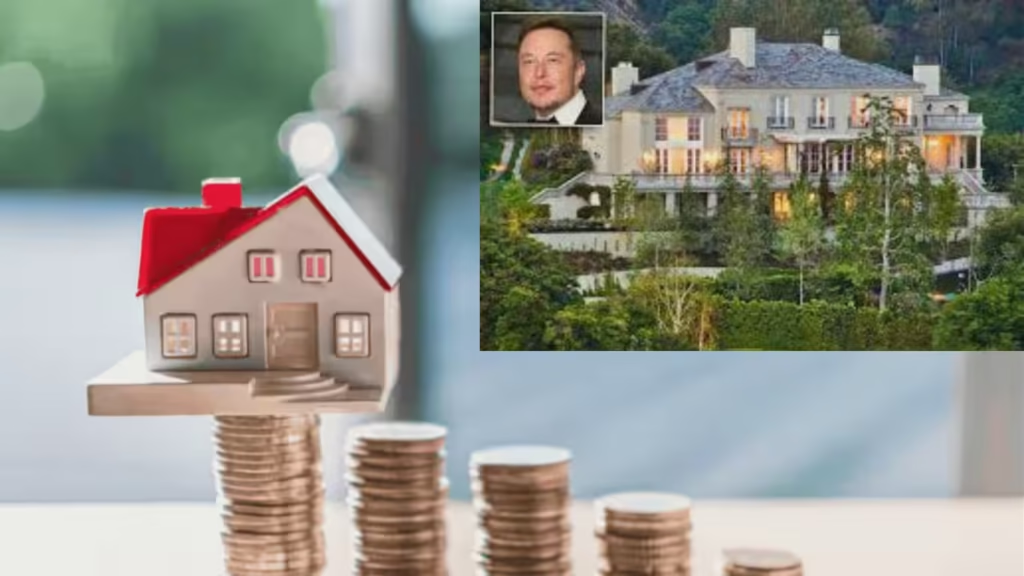
Despite possessing fortunes that could easily cover the cost of multiple luxury estates, some of the world’s wealthiest individuals continue to rely on mortgages when purchasing high-end real estate.
Among them are tech billionaires Elon Musk and Mark Zuckerberg, both of whom have leveraged home loans to acquire multimillion-dollar properties rather than paying entirely in cash. Financial experts say the strategy highlights how the ultrawealthy manage capital, preserve liquidity, and maximize long-term returns.
Why Wealthy Buyers Often Finance Luxury Homes
Although Elon Musk ranks among the richest individuals globally, his real estate purchases have included substantial mortgage financing. Reports indicate that the Tesla chief executive secured tens of millions of dollars in mortgage loans for several California properties, even while controlling a fortune worth hundreds of billions.
For many affluent investors, the decision is less about affordability and more about financial efficiency.
Industry professionals explain that most ultra-high-net-worth individuals keep a large portion of their wealth invested in stocks, private businesses, venture capital, and other appreciating assets rather than holding large amounts of cash.
By financing a home purchase, they can keep their capital invested in opportunities that may generate returns exceeding the cost of borrowing.
“High-net-worth investors prioritize liquidity and leverage,” real estate experts note. Rather than locking significant cash into a single property, they prefer maintaining flexibility while allowing their investments to continue growing.
Mark Zuckerberg’s Low-Interest Mortgage Strategy
Meta founder Mark Zuckerberg followed a similar approach when refinancing his California residence. During the era of historically low interest rates, he secured a 30-year adjustable-rate mortgage carrying an exceptionally low rate.
At such minimal borrowing costs, keeping millions of dollars invested elsewhere made greater financial sense than tying up capital in residential property.
The strategy became particularly attractive throughout the 2010s when wealthy borrowers were able to lock in financing at rates that now appear remarkably inexpensive compared with current mortgage levels.
Financial advisers often point out that if investment portfolios are expected to outperform mortgage interest costs, financing a property can create a more favorable overall return.
Tax Benefits and Inflation Advantages
Mortgages can also provide tax efficiencies under certain circumstances.
In the United States, eligible homeowners may deduct a portion of mortgage interest payments, potentially reducing the effective cost of borrowing. While limits apply, the deduction can still offer meaningful savings for some borrowers.
Inflation adds another layer of appeal. When inflation rises, the future value of money generally declines, meaning borrowers may repay debt with dollars that are worth less than when the loan was originally issued.
This dynamic can make long-term fixed borrowing especially attractive during periods of elevated inflation.
Celebrities Also Embrace Mortgage Financing
The practice is not limited to technology entrepreneurs.
Hotel heiress and media personality Paris Hilton reportedly financed part of her purchase of a luxury Beverly Hills mansion despite having substantial personal wealth. Reports show that she and her husband later secured a sizable mortgage on the property, illustrating how common leverage remains among affluent buyers.
Real estate professionals say many wealthy clients choose financing not because they need it, but because it allows them to preserve capital for investments, business ventures, or other opportunities that may offer stronger returns.
Borrowing Against Investments Instead of Selling Assets
Another popular strategy among wealthy individuals involves using investment portfolios as collateral for loans.
Known as securities-backed lending, this approach enables investors to access cash without selling stocks or triggering capital gains taxes. Major financial institutions frequently offer these lending programs to affluent clients seeking liquidity while maintaining their investment positions.
Because loan proceeds are generally not treated as taxable income, borrowers can unlock capital without creating an immediate tax obligation.
Financial analysts often describe this broader wealth-management approach as “buy, borrow, die”—a strategy that involves accumulating appreciating assets, borrowing against them when cash is needed, and ultimately passing those assets to heirs under favorable tax rules.
Lessons for Everyday Homebuyers
While the financial tools available to billionaires may differ from those available to average consumers, experts say the underlying principle remains relevant.
The key question is whether cash is better used paying off a property or invested elsewhere where it may generate greater value over time.
For many households, the answer depends on factors such as interest rates, investment opportunities, risk tolerance, and long-term financial goals.
The broader lesson from billionaire borrowers like Elon Musk and Mark Zuckerberg is that wealth building is often less about eliminating debt at all costs and more about strategically deploying capital where it can work most effectively.
Discover more from News
Subscribe to get the latest posts sent to your email.