

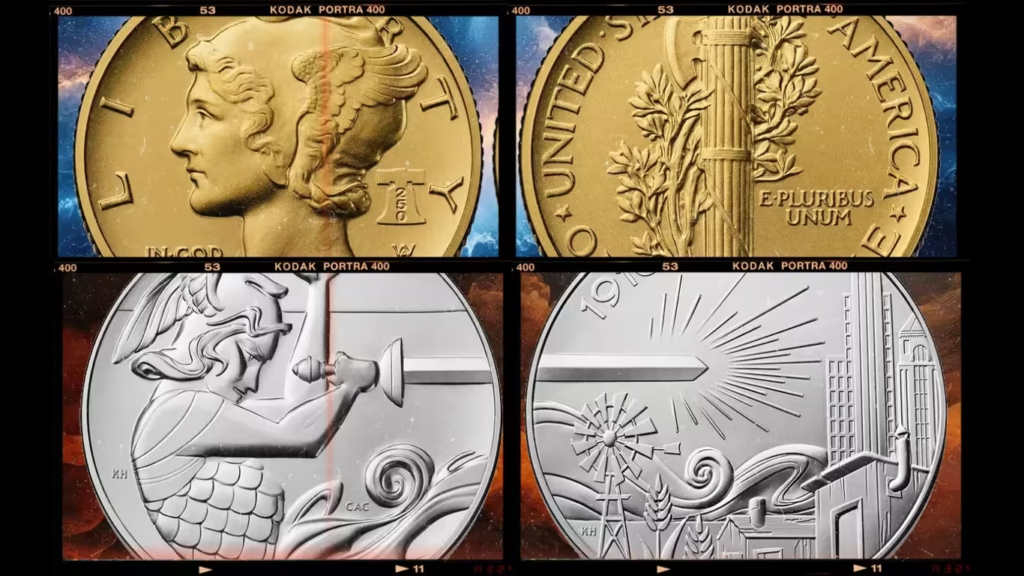
WASHINGTON, D.C. — The United States Mint has officially launched its highly anticipated Best of the Mint series with the release of the 1916 Mercury Dime Gold Coin and Silver Medal Set, marking the first installment in a special collection created to celebrate the nation’s 250th anniversary.
The release revives one of America’s most beloved coin designs while introducing it in a modern format that combines precious metals, limited mintage, and historical storytelling.
Historic Mercury Dime Returns in 24-Karat Gold
At the center of the new set is a 24-karat gold version of the iconic 1916 Mercury dime, originally designed by renowned sculptor Adolph A. Weinman. The commemorative release pairs the gold coin with a one-ounce silver medal, creating a two-piece collectible that honors both the artistry of the original design and the era in which it circulated.
The gold coin is struck at the West Point Mint, while the accompanying silver medal is produced at the Philadelphia Mint.
The Mint has capped production at 30,000 sets, with an initial household purchasing limit of one set per customer.
Launching the Best of the Mint Series
The Mercury dime set serves as the opening release in the Mint’s new Best of the Mint program, part of its broader Semiquincentennial initiative commemorating 250 years of American independence.
The program revisits some of the most influential designs in U.S. coinage history, reimagining them in 24-karat gold. After evaluating 21 historic coin designs, the Mint narrowed the selection to five through public feedback and expert consultation.
The five featured designs include:
- 1916 Mercury Dime
- 1916 Standing Liberty Quarter
- 1916 Walking Liberty Half Dollar
- 1804 Silver Dollar
- 1907 Saint-Gaudens High Relief Double Eagle
Together, the series highlights key milestones in American numismatic history, spanning more than a century of coin design innovation.
Why the Mercury Dime Remains an American Classic
First introduced in 1916, the Mercury dime is officially known as the Winged Liberty Head Dime. Its popular nickname emerged because Liberty’s winged cap resembled depictions of Mercury, the messenger god of Roman mythology.
Weinman’s obverse design portrays Liberty facing left with wings symbolizing freedom of thought. The reverse features a fasces, representing national unity and strength, accompanied by an olive branch and battle ax to convey both peace and preparedness.
The combination of symbolism and artistic excellence helped establish the Mercury dime as one of the most admired circulating coin designs in U.S. history.
Special Features of the 2026 Gold Coin
The new commemorative gold coin closely follows Weinman’s original design while incorporating elements that connect it to the nation’s 250th anniversary celebration.
Struck in 99.99% pure gold, the coin contains 0.100 troy ounce of fine gold and features an Uncirculated finish.
A notable addition is the Liberty Bell “250” privy mark, a special emblem created to commemorate America’s Semiquincentennial. The mark distinguishes the 2026 release from the original Mercury dime while preserving the historic appearance of the design.
The reverse maintains the familiar imagery of the fasces, olive branch, and traditional inscriptions associated with the classic dime.
Silver Medal Explores America’s Defining Era
While the gold coin recreates a historic design, the accompanying silver medal broadens the story by examining the period during which the Mercury dime circulated.
Covering the years 1916 through 1945, the medal reflects major events that shaped the United States, including World War I, the Great Depression, the Dust Bowl, and World War II.
Liberty appears across both sides of the medal in symbolic poses representing resilience, defense, and determination. Additional imagery includes Depression-era Hooverville structures and stylized waves symbolizing the environmental devastation of the Dust Bowl.
Inscribed with the dates “1916–1945,” the medal provides historical context that complements the original coin design and highlights the challenges faced by the nation during that era.
Product Specifications
Gold Coin
- Denomination: Dime
- Composition: 99.99% Gold
- Fine Weight: 0.100 Troy Ounce
- Finish: Uncirculated
- Diameter: 16.50 mm
- Edge: Reeded
- Mint: West Point
- Privy Mark: Liberty Bell “250”
Silver Medal
- Composition: 99.9% Silver
- Weight: 1 Troy Ounce
- Finish: Uncirculated
- Diameter: 40.60 mm
- Edge: Plain
- Mint: Philadelphia
The set is listed by the U.S. Mint under product number 26BM1 and carries a retail price of $810.
More Releases Scheduled for 2026
The Mercury dime set is only the first chapter in the Best of the Mint collection. Future releases are expected to feature the Standing Liberty Quarter, Walking Liberty Half Dollar, 1804 Silver Dollar, and the celebrated Saint-Gaudens High Relief Double Eagle.
Collectors and numismatic enthusiasts are expected to closely follow the series as it unfolds throughout 2026.
A Strong Opening for the Semiquincentennial Celebration
By combining a faithful recreation of Weinman’s classic Mercury dime with a historically themed silver medal, the U.S. Mint has delivered a release that appeals to both collectors and students of American history.
The limited-edition set blends iconic design, precious metal content, and commemorative significance, positioning it among the most notable U.S. Mint products of 2026 and an important centerpiece of the nation’s 250th anniversary celebration.
Discover more from News
Subscribe to get the latest posts sent to your email.
